Society
Trends
Teachers in primary education
In 2017, there were 154 thousand teachers working at Dutch primary schools. These were mostly women. The majority of male teachers are over the age of 55. Many teachers experience heavy workloads. Moreover, teachers – particularly older ones – earn less per hour than people of the same age and with the same education level who are employed outside education. Teachers are relatively unlikely to leave the profession. Most will continue to be employed in education.
The majority of teachers are female. Their share has increased in recent years, to over 80 percent in 2017.
Photo description: Schoolchildren in a classroom with a teacher and a parent.
Ageing
Aside from the major feminisation of primary education, ageing is another trend. Over the past five years, the share of teachers aged 55 and up has doubled to reach roughly 20 percent in 2017. The share of over-55s is particularly high among male teachers, exceeding 35 percent in 2017. Among their female colleagues, this is 18 percent. The percentage share of teachers in the age group 45 to 54 years has declined among both sexes. Especially among women, the share of teachers under the age of 25 has dropped, to less than 5 percent in 2017. Nevertheless, this share is still higher than among male teachers (3.6 percent).
Fewer full-time teachers
Of the male teaching force working in primary education in 2017, 64 percent were full-time employees. This share is higher than among female teachers (26 percent). Among both sexes, the share of full-time teachers has declined since 2003. At the same time, the share working in large part-time teaching jobs for 20 to 35 hours per week has increased while the share in small part-time jobs has remained almost stable. Women account for all of the increase in large part-time jobs among primary school staff.
Lower hourly wages
In 2015, teachers in primary education were earning an average gross salary of 26 euros per hour. According to economic research by SEO Amsterdam Economics (the Economics Faculty of the University of Amsterdam), this means their gross hourly earnings were 4 euros (14 percent) lower than outside education for employees of the same age, with the same education level and the same number of working hours. The pay gap is largest (35 percent) for full-time, male teachers aged 50 and over. As for older female teachers in full-time employment, they were earning roughly 26 percent less than their peers outside education.
The pay gaps are smaller in the younger age groups. For instance, full-time female primary teachers under the age of 35 are earning 3 percent less than other full-time female employees. Gross hourly wages for female part-time teachers in this age group are comparable with those for part-time employees outside education.
High workload and absenteeism
Together with chefs, doctors, managers and lawyers, teachers top the list of employees with the highest work pressure, as indicated by the working conditions survey conducted by CBS and TNO. Work pressure here means that people find they have to work very fast, very long hours or extra hard. More often than average, primary school teachers indicate they need to work very long hours and extra hard; they score the highest on these aspects among all occupational groups. Apart from a high workload, primary teachers often consider their work emotionally demanding. They are also much less likely to say they have autonomy in their work than the average employee. This is mainly related to the fact that they have less flexibility in taking up leave.
The level of sickness absence is relatively high among primary school teachers. In 2017, primary teachers had an absence rate of 6 percent, against an average of around 4 percent across all sectors. Primary teachers have higher absence rates than teachers in secondary and higher education.
Moving between occupations mainly within the sector
Every year, a number of primary teachers decide to change profession. At the same time, there are people in other professions who choose primary teaching as a career. Around 5 percent of all primary teachers find alternative careers every year. However, they usually stick to education and choose a similar occupation in the field, e.g. teacher in secondary education or teaching assistant. Part of them switch to health care, retail trade or secretarial services. Every year, around 7 percent of primary school teachers joining the profession are career changers from other occupations, often within the education sector, e.g. secondary teachers and educationalists.
Fewer students in training to teach primary (Pabo)
The number of potential new teachers has dropped compared to school year 2003/’04. For example, there were still 9.7 thousand first-year students of primary education (Pabo) at universities of applied sciences (HBO) in 2003/’04, but this number had more than halved to 4.5 thousand students in 2017/’18. This number has started to go up again slightly over the past few years.
In recent years, Pabo teacher education has been affected by tighter admission requirements. Newly incoming students are assessed for their knowledge of geography, history and nature and technology. These changes are aimed at improving the quality of training, but also have consequences for the number of entering first-year students. Another factor is the introduction of a new student loan system. This initially led to an increase in the number of first-year students in 2013/’14 and 2014/’15, followed by a sharp drop in 2015/’16.
A job outside primary education
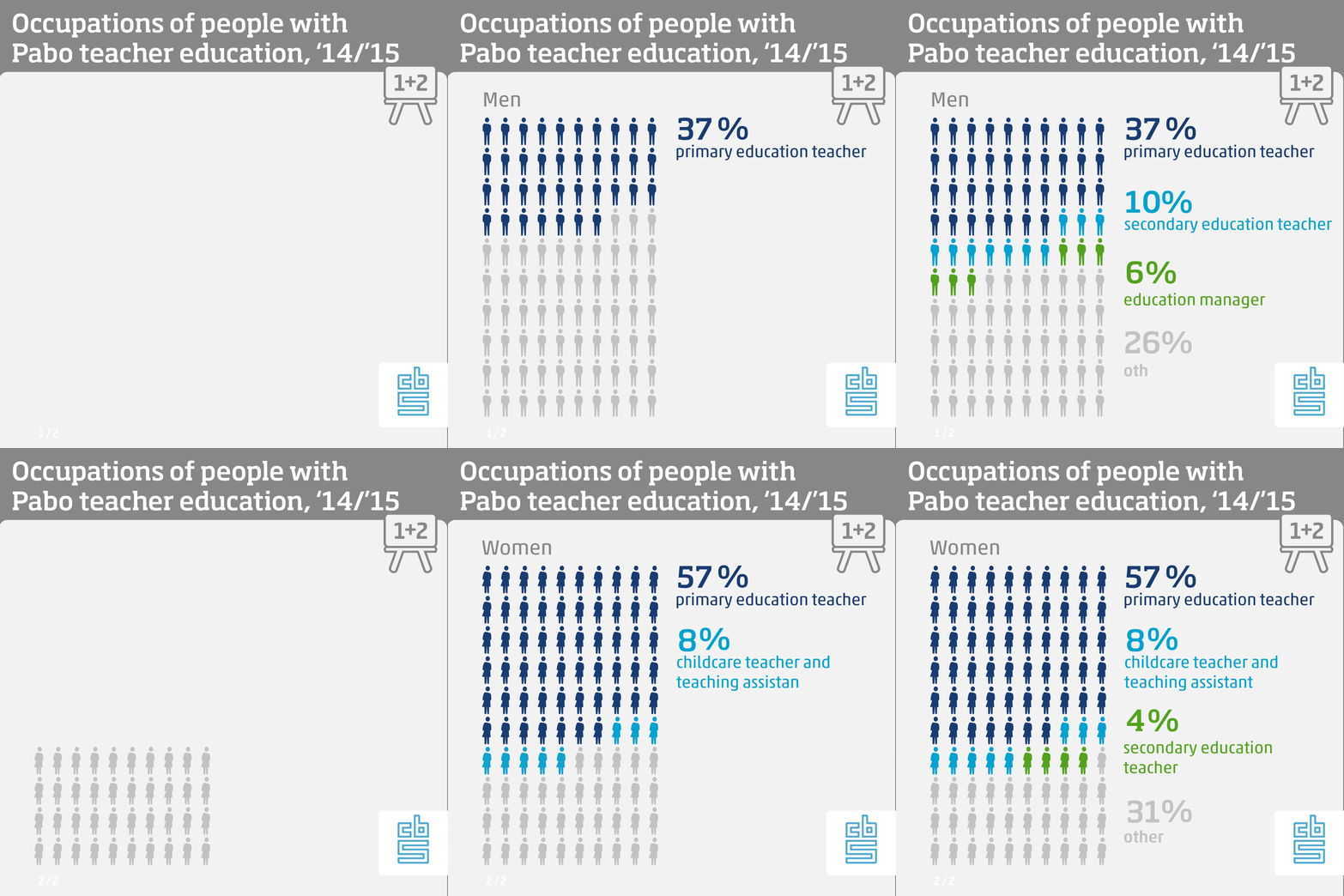
Not everyone with a degree in primary teacher training will become a classroom teacher. Among male Pabo graduates, 6 in 10 are engaged in a profession other than teaching. Some end up as teachers in secondary education (6 percent) while others become managers (10 percent). Women with a Pabo diploma who do not work as primary school teachers are relatively often childcare group leaders, teaching assistants (9 percent) or teachers in secondary education (4 percent).